

License to Wed
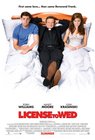 One of the big ironies of modern society is that we require people to obtain licenses for important and trivial tasks before we let them lose onto the world. I remember being told in my late teens. The of two most important decisions in life about choosing the right job and the right wife. For almost every job we need to demonstrate qualification before we can get hired. But when it comes to marriage anyone having reached the appropriate age can self-declare to be ready for the task of committing for a life-time. License to Wed thinks this to be ridiculous. The reverend Frank (Robin Williams) believes that a couple should first go through a rigorous program of examinations before they can be declared fit to marry. Sadie Jones (Mandy Moore) enlists reverend Frank to help her figure out whether Ben Jones (John Krasinski) is the right one. I thought that the film’s premise was clever but the execution left much to be desired.
Road to Perdition
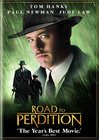 This dark, prohibition era, film is a bit hard to swallow. By design it is unlike The Untouchables where good triumphs over evil. Human life does not count for much in a Mafia-ruled Midwestern town. The film has a number of technical flaws that disturb the attentive viewer. The most intriguing feature of the film is how the narrative begins and ends. The opening words run: There are many stories about Michael Sullivan. Some say he was a decent man. Some say there was no good in him at all. But I once spent 6 weeks on the road with him, in the winter of 1931. This is our story. The final words bring the narrative to a wonderful closure: I saw then that my father’s only fear was that his son would follow the same road. And that was the last time I ever held a gun. People always thought I grew up on a farm. And I guess, in a way, I did. But I lived a lifetime before that, in those six weeks on the road in the winter of 1931.
The Invisible
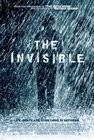 High School Movie. Not long until graduation. Boy wants to become a writer in New York, escaping his controlling widow mother. Girl, after losing her mother, is angry and assumes the role of a violent troublemaker and gang leader. Girl kills boy, smacking him once too hard on the head. But there is a twist. Taking the Christian idea of an eternal soul, boy is somewhere between life and death, between a bodily and merely spiritual existence. The boy has a body that is invisible to everyone except other dead creates and us viewers. The virtually dead body of the boy is lying dying in a hole in the woods and now his invisible self tries to get in contact with the living before he cannot be brought back to life. It one point towards this film reminded me of Romeo and Juliet, only with a different ending…
A Short Primer on Conservatism for Liberals
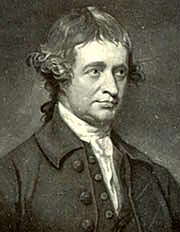 David Brooks articulates the intellectual conservatism that will give any Democrat and Republican food for thought:
The Republican Collapse
Modern conservatism begins with Edmund Burke. What Burke articulated was not an ideology or a creed, but a disposition, a reverence for tradition, a suspicion of radical change. When conservatism came to America, it became creedal. Free market conservatives built a creed around freedom and capitalism. Religious conservatives built a creed around their conception of a transcendent order. Neoconservatives and others built a creed around the words of Lincoln and the founders.
Continue Reading
Ratatouille
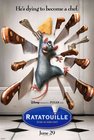 Brad Bird (writer, director) and Pixar have done it again. I continue to stand in awe of the dazzling imagination this team is bringing to the movies. Visually and conceptually Ratatouille is exquisitely pleasing. You don’t feel that this new film is a tiny bit repetitive of their previous effort The Incredibles. Guenter Grass selected the rat as the central character in his 1980s fable about human self-destruction and an apocalypse after which only rats will survive on our planet. Bird turns Grass on his head. Bird’s rat Remy does not want to live off human garbage but instead desires to eat the best human cuisine can offer. Remy’s inspiration is France most famous chef Gusteau, whose book “Everyone can cook” Remy has studied extensively. Remy also watches Gusteau secretly on TV. When Remy is washed from the French countryside to Paris, an incredible culinary adventure awaits him. Join Remy in Paris!
Jealous of the people at 15 Central Park West
 It was always clear that me that with a lot of money New York City would be even a more spectacular place to live. I accepted with buddhist equanimity my low position in the money hierarchy until I read this review of the new building at 15 Central Park West. Should I have tried to become a rock star or a Wall Street Mogul so that I could have moved into this splendid building?
In an essay titled “The Plight of the Prosperous,” published in 1950 in this magazine, Lewis Mumford dismissed the living accommodations of upscale New Yorkers as little better than slums. “I sometimes wonder what self-hypnosis has led the well-to-do citizens of New York, for the last seventy-five years, to accept the quarters that are offered them with the idea that they are doing well by themselves,” he wrote.
Continue ReadingAre you the next Buddha?
 How would you ever know if you are the next Buddha? Or are you Christ, as in the second coming of Christ? Slate reflects on the difficulties of identifying the next Buddha.

© 2026 Peter Murmann. Powered by ExpressionEngine.
